Selected reviews of Henri Lefebvre's The Missing Pieces translated by David L. Sweet
I won't be writing a review this time, just providing a list of links to reviews of poet and publisher Henri Lefebvre's book The Missing Pieces, which I translated into English for Semiotext(e) in 2014. The original French title is Les Unités perdues and the book was first published by Manuella Editions in 2011. Reviews have appeared in The Los Angeles Times, Harper's Magazine, Hyperallergic and other magazines and journals. The book was also included in the Semiotext(e) installation at the last Whitney Biennial in New York (the installation included my translation of Baudrillard's Architecture: Truth or Radicalism?).
http://www.latimes.com/entertainment/arts/miranda/la-et-cam-missing-henri-lefebvre-20141208-column.html
http://hyperallergic.com/196363/a-poetic-record-of-creations-lost-missing-or-destroyed/
http://www.publishersweekly.com/978-1-58435-159-7
http://www.3ammagazine.com/3am/bullet-points-a-review-of-the-missing-pieces-by-henri-lefebvre/
http://www.utne.com/arts/the-missing-pieces-ze0z1503zcwil.aspx
http://harpers.org/archive/2014/10/remembrance-of-things-trashed/
Friday, April 17, 2015

Thursday, February 5, 2015
Cubist Painting of Picasso, Braque, Gris and Léger
Review of “Cubism: The Leonard A. Lauder Collection” at The Metropolitan Museum, October
20, 2014 – February 16, 2015
The Concupiscence of
Cubism
 |
| Fernand Leger, "The Typographer" |
As The New York Times announced last year in its review of this superlative
exhibition, the Leonard A. Lauder Collection of Cubist Painting—recently
donated to The Metropolitan Museum of Art—fills a conspicuous gap in the Met’s
modern art collection, so much so that the museum has become a veritable rival to
MoMA and the Guggenheim in the field of modern painting. Aside from the long-term benefits of the gift
is the short-term one of this encompassing yet muscularly compact show, one
that helps us reconsider (yet ultimately reaffirm) the incomparable achievement
of the inventors of the form: Picasso,
Braque, Gris and Léger. As their works again
prove with undiminished bravura, these artists introduced some of the most
radical yet enduring changes to the cultural conception of what art is and how
it works. Beyond illusionism and the
representation of phenomenal reality, beyond structural abstraction and the
liberation of color and line from objects in space, painting was now first and
foremost a philosophic investigation of the relation between structure and
appearance, form and perception. The
rigor of this investigation ensured the work’s integrity as it oscillated
between representation and pure composition.
Art in the hands of the cubists had become both a metaphysical
discipline and a poetics of the sign.
Strangely,
while most reviewers are quick to celebrate the cubists’ creative destruction of
illusionistic space and the shift toward pure abstraction—a development the
movement certainly contributed to—its aesthetic essence remains this “reciprocity
of directions” between apparent depth and literal surface, as Leo Steinberg once
described it.[1] In short, Cubism’s success still depends on an
assumption of illusionism, albeit an illusionism that is ingeniously curtailed
at virtually every turn, resulting in a “consistent self-contradiction,” as Ernest
Gombrich famously declared.[2]
 |
| Picasso, "Nude in Armchair" |
 |
| Braque's "Duo pour flute" |
 |
| Braque's "Bottle, Glass and Pipe" |
 |
| Picasso's "Head of a Man With a Mustache" |
 |
| Gris" "Fruit Bowl" to accompany Reverdy's poem |
 |
| Leger's "Drawing for 'The Staircase'" |
[1] Leo
Steinberg, “The Polemical Part” in Art in
America (March/April, 1979): 121.
[2] E. H.
Gombrich, Art and Illusion. Princeton:
Princeton University Press, 1969: 281-282.
[3] See Rene
de Costa’s “Juan Gris and Poetry: From Illustration to Creation” in Art in America 71.4 (December 1989):
679; and Andrew Rothwell’s “Cubism and the Avant-Garde Prose-Poem: Figural
Space in Pierre Reverdy’s Au Soleil du
plafond” in French Studies 42.3
(July 1988): 302.
Friday, February 28, 2014
Jean Baudrillard on Architecture
My translation of Jean Baudrillard's Architecture: Truth or Radicalism? Semiotext(e): Los Angeles, 2014. One of the Semiotext(e) editions on display at the Whitney Biennial, 2014, at the Whitney Museum of American Art, March 7 - May 24, 2014.
 Excerpt:

Beaubourg. What does Beaubourg mean? Art? Aesthetics?
Culture? No: It means circularity, storage, flux, whether
of individuals, objects or signs. And
that is what the architecture of Beaubourg says all too well, literally: it’s a cultural object, a cultural movement
of the obscure disaster of culture. What
is fantastic about it, if also involuntary, is that it brings out both culture and the thing to which it succumbs more and more,
the thing to which it has already succumbed—the perfusion, surfusion, and
confusion of all signs. So too with the
World Trade Center, the miracle of which is to give us, simultaneously, a
fantastic spectacle of the city and its verticality and a flagrant symbol of that
to which the city has succumbed, of that to which it has died as a historic
form. It’s precisely this that gives
such architecture its power: it is both
a form of extreme anticipation and of retrospective nostalgia for a lost
object.
Here
are just a few fragments of the primal scene of architecture as seen through
the imagination of a savage. You can
interpret them both literally and in all senses, as Rimbaud said. One of the possible senses being that there still
exists, beyond all illusion or disillusion, a future for architecture—something
I still believe in—even if this future isn’t exactly architectural. There is a future for architecture for the
simple reason that no one has yet invented the building, the architectural
object, that will put an end to all others, that will put an end to space
itself—neither the city that will be the end of all cities, nor the thought
that will be the end of all thoughts, even if that’s everyone’s ultimate dream. Though it can't be realized, there is still the
hope.
Translated by D. L. Sweet
Translated by D. L. Sweet
Friday, January 24, 2014
Henri Michaux: "Seize the Landscape"
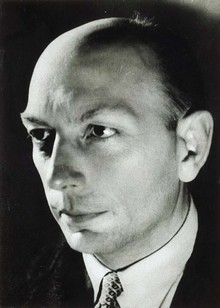 |
| Surrealist poet Henri Michaux |
SEIZE THE LANDSCAPE
They say that in most people who watch a landscape a
capsule is formed. This capsule is not as small as
one thinks.
This capsule is the
medium between the landscape and the observer.
If the observer were able to uproot this capsule and carry it off, he
would be incommensurably happy, he would capture paradise on earth.
But an extreme
delicacy is required, a prodigious force and knowledge of what one is
doing. It’s like pulling up a tree in
one yank with all its roots intact. The
little smart alecks who are using, just about everywhere, their mnemonic techniques, graphic representations, comparisons, analyses, and brutalities on the
observed material, not only don’t know what I’m talking about, but they
absolutely cannot recognize the marvelous and almost infantine simplicity of
this operation that brings you, quite simply, to the threshold of ecstasy.
Translated by D. L. Sweet
EMPOIGNER LE PAYSAGE
Il se forme, disent-ils, en la plupart des gens qui regardent un paysage, une capsule. Cette capsule n’est pas si petite qu’on croit.
Cette capsule est le medium entre le paysage et le contempleur. Si le contempleur pouvait arracher cette capsule et l’emporter, il serait heureux incommensurablement, il conquerrait le paradis sur terre.
Mais il y faut un delicatesse extreme, une force prodigieuse et savoir ce qu’on fait. C’est comme arracher d’un coup un arbre avec toutes ces racines. Les petits malins que usent un peu partout de moyens mnémotechniques, de representations graphiques, de comparaisons, d’analyses et de brutalités sur la matière observée, non seulement ne savent pas de quoi je viens de parler, mais ils ne peuvent absolument se rendre compte de la simplicité merveilleuse et presque enfantine de cette operation qui vous mène simplement au seuil de l’extase.
Thursday, January 16, 2014
American Voices: T. S. Eliot
A Close Reading of Some Verses from The Waste Land [for my students]
DA
ALLUSIONS, QUOTATIONS, FOOTNOTES, TRANSLATIONS
 |
| I Tiresias, though blind, throbbing between two lives, / Old man with wrinkled female breasts ... |
DA
Turn in the door once and turn once only
We think of the key, each in his prison
Thinking of the key, each confirms a prison
Only at nightfall, aethereal rumours
Simply by having read up to line
410 in the fifth and final section (“What the Thunder Said”) of T. S. Eliot’s The Waste Land will have the effect of
instructing readers about the importance of reading footnotes, whether the ones
supplied by Eliot himself or the those provided by Frank Kermode, who edited
the Penguin edition of The Waste Land and
Other Poems that is being used for this essay. The Penguin notes—two of which I’ve
reproduced here as footnotes for readers’ convenience—provide invaluable
information for explaining the passage quoted above.
For instructional purposes,
let’s proceed as if we were reading the poem without notes—at least at first.
The first words one sees are foreign, hence meaningless to the average
English reader: “DA/ Dayadhvam.” Clearly, there is nothing to be said about them
without reference to more notes, which appear earlier in the text but which
we’ll get to later. On a hunch, however,
this writer is guessing the words are Indic, probably Sanskrit, the study of which,
as any student of Western languages knows, was crucial for the discovery of
what linguists call the Indo-European family of languages, indicating an
interesting pre-historic linguistic connection between some otherwise very
distant peoples living at almost opposite ends of the Eurasian land mass.
By
contrast with the first words in the passage (DA, Dayadhvam), the rest of the verse is in English, hence perfectly comprehensible: The speaker in the poem, referring to him or
herself as “I,” has heard a key turn in the door, but it turns once only. The key could be opening or locking the door,
one cannot tell, but the words (“turn once only”) sound ominous. This ominousness is confirmed in the
following lines in which the speaker shifts into first person plural (“We”),
hence, presumably speaking for a group or even all of us (i.e., we readers). The lines become both more concrete (by
referring to a prison) while also becoming more speculative (by suggesting that
each one of “us” inhabits a kind of prison).
The idea that we all inhabit our own sort of prison cell is reinforced
by the reference to “nightfall,” yet also thrown into doubt by the mention of
“aethereal rumors” that “Revive for a moment a broken Coriolanus.” It doesn’t sound hopeful—rumors reviving a “broken”
person for just a moment, thus implying false hope. Most educated readers will recognize the fact
that Coriolanus is the title of a play by Shakespeare, though many would, if
pressed, have to admit they have never read it.
Either way, one can probably guess that Coriolanus is a tragic figure,
certainly not comic, given his brokenness and his momentary, hence false
hope. In short, the passage is suggesting
that the speaker has been locked away in isolation, a sort of broken Coriolanus
with only false glimmers of hope.
Now
let’s turn to the notes. Eliot himself
gives his readers the source for line 411: some lines—in Italian—from Dante’s Inferno.
If we then consult the Penguin notes by Kermode, we are given a
translation of the reference: “and from
below I heard the door of the horrible tower being locked.” The editor then informs readers that the
lines refer to a character named Ugolino in one of the lower pits of Hell who,
in life, was locked in a tower with his sons by his enemies and starved to
death, though in the process of dying he also ate the bodies of his sons to delay
his end. Yuck! (Incidentally, there's a huge Beaux Arts statue
of him in one of the sculpture galleries at the Met.) We don’t learn here why he was put in Hell
(the Inferno), but cannibalism seems a pretty terrible thing, perhaps worthy of
eternal damnation (if one believes in that sort of thing). In the rest of the note, the editor reminds
us that Eliot also refers (in his notes
on these same lines) to the philosophy of F. H. Bradley, about whom the poet
wrote a dissertation while enrolled at Harvard University. Eliot’s own note concludes by quoting Bradley
himself, a quote that ends with the statement: “the whole world for each is peculiar and
private to that soul.” Indeed, our Penguin
notes link Bradley’s philosophy with Eliot’s image in a way that indicates “suffering
isolation.”
“Suffering
isolation”: now we’re onto
something. Each one of us is locked up
in his or her own mental prison, perhaps even living on scraps (or ideas) that
some of us would hurl away in horror if we knew what they actually consisted of
or implied. The final reference to
Coriolanus confirms this by mentioning that the hero of Shakespeare’s play was
“broken and exiled through his own pride and unwillingness to ingratiate
himself with the mob; he revived—for a moment—when given the chance to fight
against Rome, his own country.” The note
suggests another kind of tragic cannibalism, this time in the form of rebellion
against one’s own country or people. Now
we understand the fragment that reads “each confirms a prison/ Only at
nightfall,” suggesting that it takes a great loss or tragedy (a kind of “nightfall”),
perhaps even a war, to remind us that we are each living, suffering, in isolation
and that such consolatory notions as “family,” “country,” “community,” or even
the possibility of communication, are illusory: appearances that make us feel safe, secure,
free and loved. Such things are at best
“aethereal rumors,” transitory, lightweight things that are not to be taken
seriously and which might even harm us by encouraging false hopes.
Okay—now
let’s try to tackle the words in Sanskrit.
Again the notes will help to explain Eliot’s purpose and methods as a
poet. The words “DA” and “Dayadhvam” refer back to the title of
the fifth and final section of The Waste
Land: “What the Thunder Said.” Eliot
is referring to one of the Upanishads,
a series of sacred texts that form part of the huge corpus of Sanskrit books in
Indian culture and religion—the adherents of which are the same people to whom
Western Europeans are linguistically connected.
In the episode Eliot is alluding to, various gods, demons, and men ask their
Creator to speak to them, to which He responds with the same answer in the
voice of thunder: “DA.” Each group interprets the word/sound in its
own way, yielding the three words “Datta, Dayadhvam, Damyata.” Eliot himself translates these as give, sympathize, and control (the latter perhaps more in the
sense of “self-control”). Now we realize
that the story of Ugolino is being associated with the word dayadhvam, “to sympathize.” Though we might think “self-control” would be
more suited as a recommendation for Ugolino, not only are we being asked to “sympathize”
with someone like this tragic hero (whose damnation doesn’t minimize the
injustice of his horrible death), but also with someone like Coriolanus. Both of these heroes are proud, misunderstood
figures—at least they are depicted that way by Dante and Shakespeare. Furthermore, the word “sympathize” (dayadhvam) implies that there is some
primal cultural importance to sympathizing in general, i.e., with all others—even
across borders—by breaking the self-imposed prisons of, say, delusion, pride or
other forms of mental isolation. We start
to see connections with other passages in “What the Thunder Said,” passages
introduced by the two leftover Sanskrit words, words that now seem both
foundational in terms of understanding how languages evolve, but also in terms
of a wider, human ethos of mutual understanding and self-restraint.
Are
there other passages that hearken back to or foreshadow the horror of Ugolino’s
predicament, or at least that of the speaker, whose situation is being compared
to Ugolino’s? One that immediately comes
to mind is the first epigraph to Eliot’s entire poem, a quotation in Latin (with
a little Greek thrown in) from Petronius’s Satyricon,
according to the Penguin edition. Kermode
translates the epigraph for the reader (unlike Eliot himself who prefers to
leave his modern readers in the dark and thus compels them to confront the
foreignness of foreign languages). The
epigraph, of course, describes how some boys in ancient or mythic times used to
rattle on the cage of the famous Cumaean Sybil and ask her what she wanted, to
which she replied that she wanted to die.
As many of us already know, the Cumaean Sybil was granted everlasting
life by the god Apollo, but not eternal youth and beauty, basically because she
forgot to ask for it. Now she’s a
withered shadow of herself, a prune. In
short, she’s a prisoner of her own poor communication skills, and even the
epigraph seems to point this out since, in the poem, not only is her own Greek
not translated into Latin, it’s not even transliterated
from the Greek alphabet (though again, the Penguin editor does it for us in his
notes; if he hadn’t, most of us might still not know that she wants to die).
Miscommunication
is certainly one of the things that greatly impede sympathy and understanding,
but actual language barriers can be even worse in this regard since people
can’t begin to understand each other if they don’t have at least some sort of linguistic
conventions in common. Just as other
generations of people might once have asked why different people couldn’t all
speak the same language to avoid misunderstandings and conflicts, so might we,
as readers of Eliot, ask why the poet didn’t write his entire poem in a single language,
preferably English, for those of us who are comfortable speaking it. Just as the poem seems to be a bunch of
fragmented images that the readers somehow have to reconnect with each other (perhaps
on the basis of myths or tradition—things supposedly shattered by modern experience),
so is the poem also linguistically broken up—a series of quotes from
foreign-language texts as well as fragments translated into English, perhaps
inaccurately or even distortedly. Hence
it’s also a literary text that requires supplementary reading, research, translation,
and interpretation in order just to BEGIN to understand it. Eliot certainly could have translated all the foreign language passages himself,
and indeed he actually did in many
instances. But the point of all this
difficulty seems to be that if people read the poem only in translation, they will
have little conception of the real difficulty of understanding foreign
languages and the foreignness of foreign texts, not to mention the difficulty
of understanding other people (sometimes) in one’s own language.
Aside from the fractured images, such pampered readers would miss a whole other level of meaning—the problem of living in a world of multiple, competing languages and literary cultures. In short, translating the whole poem into English would make it too easy, would isolate English language readers in their Englishness, though the Penguin editor, Kermode, goes as far as possible to do just that: i.e., to make it easy! Nonetheless, the consequence of making things too easy (just like making things too hard) is miscommunication, and the consequence of miscommunication can be terrible, so translation and meticulous citation, like Goldilocks’ particular choice of porridge (just right), seem viable, practical solutions to extremes and to overcoming fears of otherness (though Eliot himself seems vulnerable to such fears when he writes of “hooded hordes swarming/ Over endless plains” (ll. 369-370)). Much as Eliot’s narrator says that, at the end of the poem, “These fragments [he has] shored against [his] ruins,” so might Kermode be saying, “These footnotes and translations I have shored against Eliot’s readers’ incomprehension.” The favor is appreciated.
Aside from the fractured images, such pampered readers would miss a whole other level of meaning—the problem of living in a world of multiple, competing languages and literary cultures. In short, translating the whole poem into English would make it too easy, would isolate English language readers in their Englishness, though the Penguin editor, Kermode, goes as far as possible to do just that: i.e., to make it easy! Nonetheless, the consequence of making things too easy (just like making things too hard) is miscommunication, and the consequence of miscommunication can be terrible, so translation and meticulous citation, like Goldilocks’ particular choice of porridge (just right), seem viable, practical solutions to extremes and to overcoming fears of otherness (though Eliot himself seems vulnerable to such fears when he writes of “hooded hordes swarming/ Over endless plains” (ll. 369-370)). Much as Eliot’s narrator says that, at the end of the poem, “These fragments [he has] shored against [his] ruins,” so might Kermode be saying, “These footnotes and translations I have shored against Eliot’s readers’ incomprehension.” The favor is appreciated.
But
are Kermode’s concerns the same as Eliot’s?
Though Eliot did, himself, provide various notes as well, they are
sometimes ironic and misleading, as if he were getting revenge against the
publishers who bullied him into adding them to later editions of his great poem
(or against Ezra Pound, the poet who cut all of the original “explanatory”
passages from the original poem). On the
other hand, translation itself becomes an issue in the ultimate lines of the
poem that follow the allusions to Ugolino and Coriolanus. As if he wanted to accelerate his poetics of
fragmentation (even if some credit for this must also go to Pound, whom Eliot called
“il miglior fabbro” [see notes]), Eliot’s last lines are even more fragmented
than what has preceded. The result is
the following:
I
sat upon the shore
Fishing, with the arid plain behind me
Shall I at least set my lands in order?
London Bridge is falling down falling down falling
down
Poi s’ascose ne foco
che gli affina
Quando fiam ceu
chelidon—O swallow swallow
Le Prince d’Aquitaine
à la tour abolie
These fragments I have shored against my ruins
Why then Ile fit you.
Hieronymo’s mad againe.
Datta. Dayadhvam. Damyata.
Shantih
shantih shantih (ll.
423-433)
It’s quite a jumble: four languages altogether, and some of the
English spellings are not standardized, suggesting an older literary epoch. I won’t explain all of the fragments, though
there is obviously some more Dante in Italian, some French (from Gérard de
Nerval describing a disinherited hero and a ruined tower), as well as more
Sanskrit at the end. The famous “fragments
… ruins” line is, of course, vital for interpreting the poem as a whole, according
to many critics.
But what is one to make of “Why then Ile fit you. Hieronymo’s mad againe”? The fact that the line is in the English reader’s own language doesn’t seem to help us much. Though I remember that the line is from The Spanish Tragedy, a pre-Shakespearean play by Thomas Kyd, I don’t remember the plot, except that it was a revenge play. As the editors’ notes happily inform us, the subtitle of that play is “Hieronymo’s mad againe,” referring to the revenge-getting protagonist of the play (we have to wonder if the play wasn’t a sequel to some other play about Hieronymo’s first bout of madness). What is interesting for our purposes, however, is the fact that “Why then, Ile fit you” is spoken by Hieronymo when, as Kermode againe tells us, he is “given the opportunity offered by an invitation to stage a court entertainment,” an opportunity that will allow him to get revenge for the death of his son. “Why then, Ile fit you” is what he says when those supposedly guilty of his son’s murder request that the “entertainment” (or play), originally written in Latin, Greek, Italian and French, “be set down in English, more largely, for the easier understanding to every public reader” (IV, iv, 18-19). “Ile fit you,” indicates that Hieronymo is willing to do so, i.e., willing to translate the different parts into English. However, it also means, “I’ll give you your due.” In other words—as Shakespeare wrote in another play—“the play’s the thing wherein we’ll catch […] the king…” and thus give the guilty their due by making it possible for one who is wronged to get revenge.
Perhaps if those characters listening to Hieronymo’s words had understood this alternative meaning, they would not have stayed to watch the play they so eagerly desired to understand in their own language. Maybe the advantage, then, of knowing other languages, or at least attempting to understand them, is the avoidance of “ruin” (WWI had been concluded a few years before), or at least the avoidance of Eliot’s personal ruin (Eliot’s “I can connect nothing with nothing” as against E. M. Forster’s “only connect”), and the possibility of peace: “Shantih shantih shantih.”
But what is one to make of “Why then Ile fit you. Hieronymo’s mad againe”? The fact that the line is in the English reader’s own language doesn’t seem to help us much. Though I remember that the line is from The Spanish Tragedy, a pre-Shakespearean play by Thomas Kyd, I don’t remember the plot, except that it was a revenge play. As the editors’ notes happily inform us, the subtitle of that play is “Hieronymo’s mad againe,” referring to the revenge-getting protagonist of the play (we have to wonder if the play wasn’t a sequel to some other play about Hieronymo’s first bout of madness). What is interesting for our purposes, however, is the fact that “Why then, Ile fit you” is spoken by Hieronymo when, as Kermode againe tells us, he is “given the opportunity offered by an invitation to stage a court entertainment,” an opportunity that will allow him to get revenge for the death of his son. “Why then, Ile fit you” is what he says when those supposedly guilty of his son’s murder request that the “entertainment” (or play), originally written in Latin, Greek, Italian and French, “be set down in English, more largely, for the easier understanding to every public reader” (IV, iv, 18-19). “Ile fit you,” indicates that Hieronymo is willing to do so, i.e., willing to translate the different parts into English. However, it also means, “I’ll give you your due.” In other words—as Shakespeare wrote in another play—“the play’s the thing wherein we’ll catch […] the king…” and thus give the guilty their due by making it possible for one who is wronged to get revenge.
Perhaps if those characters listening to Hieronymo’s words had understood this alternative meaning, they would not have stayed to watch the play they so eagerly desired to understand in their own language. Maybe the advantage, then, of knowing other languages, or at least attempting to understand them, is the avoidance of “ruin” (WWI had been concluded a few years before), or at least the avoidance of Eliot’s personal ruin (Eliot’s “I can connect nothing with nothing” as against E. M. Forster’s “only connect”), and the possibility of peace: “Shantih shantih shantih.”
In
short, the poem does (in language) what it’s about—enacts the sometimes tragic
discontinuities of the modern world, some proofs of which were World War I and
its aftermath. Eliot—as a sort of
disinherited, expatriate American living in London and working in a small
office in the basement of Lloyd’s Bank for up to fifteen hours a day before
returning every evening to his mentally-disturbed wife—understood too keenly
the madness of modern experience and the need to re-establish connections between
its broken parts and its over-specialized disciplines (this is one of
Habermas’s arguments for Communication Theory).
Though the solutions Eliot would later enunciate—Anglo-Catholicism,
Classicism, and Royalism—seem rather pointless, anachronistic responses to
modern problems, we don’t doubt that Eliot’s original, literary diagnosis was largely
correct, given subsequent twentieth-century developments.
[1] [note 13
in Penguin edition] the key: Eliot
refers to Dante, Inferno, XXXIII.46:
“ed io sentii chiavar l’uscio di sotto/ all’orribile torre” (“and from below I
heard the door of the horrible tower being locked”). The words are spoken by Ugolino, who devoured
his children when starving in captivity.
The key of the tower was thrown into the river. Eliot adds to this image of suffering
isolation a quotation from the work of a philosopher he had intensively studied
as a Ph.D. student, F. H. Bradley’s Appearance
and Reality (1893), p. 346. Eliot’s
note offers an important clue to what he is doing in such poems as “Gerontion”
and The Waste Land.
[2] [note 14
in Penguin edition] Coriolanus: Eliot
greatly admired Shakespeare’s play of this title (ca. 1608) and later wrote the
unfinished poem “Coriolan” (the title of Beethoven’s overture), first published
in 1936. Coriolanus was broken and
exiled through his own pride and unwillingness to ingratiate himself with the
mob; he revived—for a moment—when given the chance to fight against Rome, his
own country.
Subscribe to:
Posts (Atom)